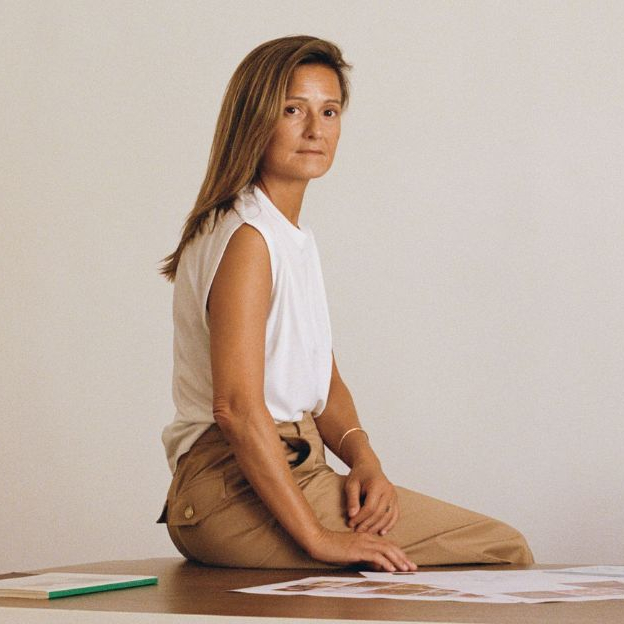
Photo credits : Kestutis Zilionis
Art is often a quest for meaning, a dialogue between past and present, between tradition and reinvention. For Noé Kuremoto, creation became an obvious path, even though her journey has been marked by introspection and diverse artistic explorations. Between Osaka, London, and Lithuania where her European studio is nestled in the serene lake region her work as a ceramicist strikes a delicate balance between craftsmanship and concept. In this interview, she shares her journey, her influences, and the way she breathes life into her creations. A deep dive into the world of an artist who transforms clay into a timeless language.
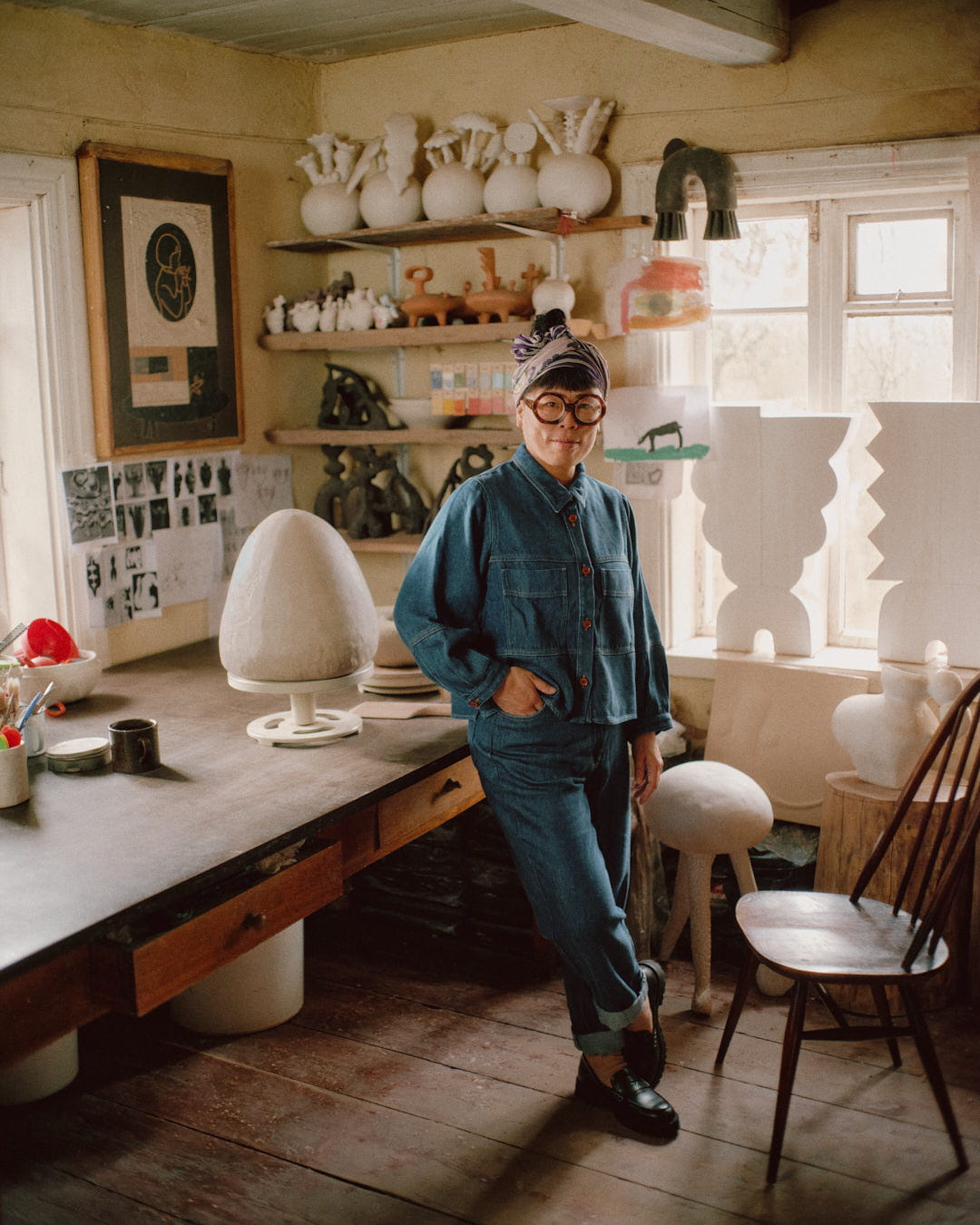

Can you tell us about your journey and what led you to become a ceramicist? How did your studies at the Beaux-Arts at Central Saint Martins influence your artistic practice?
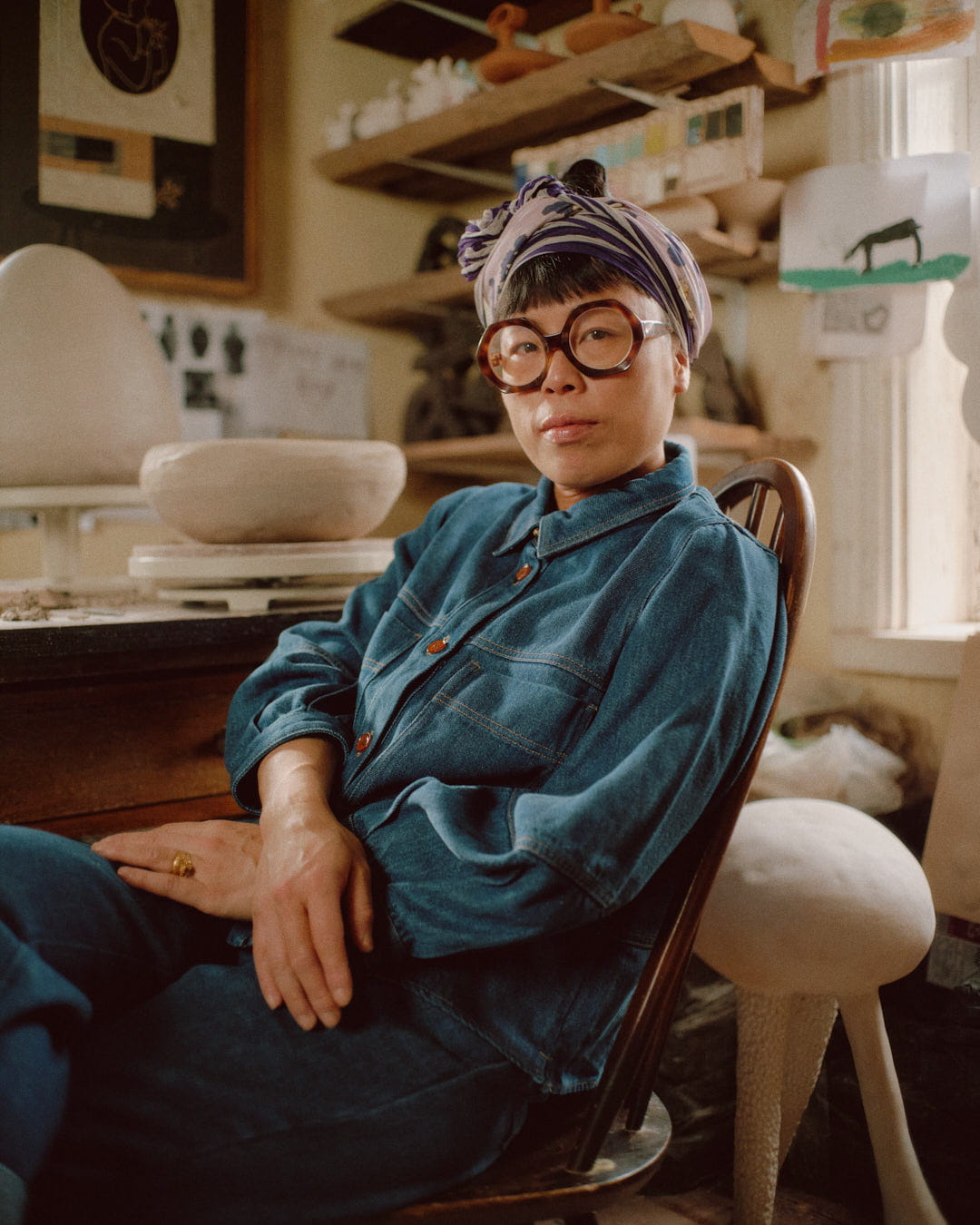
I grew up in a house full of artists proper, obsessive, live-and-breathe-it artists. My father, a sculptor and fine art professor, surrounded me with painters, ceramists, printmakers, and sculptors who had an unshakable sense of purpose. I didn’t fully get it then, but looking back, I see how rare it was to be raised by people who were so unapologetically devoted to their mission through their art. With that kind of influence, I was bound to end up in the arts. And yet, I never imagined I’d end up in ceramics.
I went to Central Saint Martins (CSM) to study Conceptual Art. Performance, video installations, site-specific works, things that felt urgent, raw, of-the-moment. London in the ‘90s was an absolute riot of creative energy. It was the era of Young British Artists Tracey Emin’s unmade bed, Damien Hirst’s formaldehyde sheep, Rachel Whiteread casting entire houses in resin. For an 18-year-old fresh from Japan, it was intoxicating.
So I abandoned tradition. Including ceramics (which is pretty ironic, given where I am now). Back then, it felt old-school, too steeped in history, too rigid. I wanted provocation, not preservation. Even now, though I work with clay, I don’t cling to it. Materials are just a means to an end the idea always comes first.
Central Saint Martins (CSM) was exhilarating, terrifying, and the best kind of disorienting. In Japan, I’d trained as a painter and printmaker, where precision and observation were everything. I was always that kid who was the best in an art class, but at CSM? No one cared. My professors shrugged at my technical skills. A revelation. I had to start from scratch. No more hiding behind technique nor prettiness. No more leaning on what was beautiful. Beauty became a dirty word.
And that’s when I really started making art. I sit somewhere between the two worlds: conceptual art and fine craftsmanship. With time, I started questioning conceptual art’s exclusivity. The coded language. The sense of superiority that often alienates people who haven’t studied contemporary art. That’s where fine art still wins. Beauty, craft, materiality they create an instant, human connection. The real challenge is balance. Being conceptually sharp without pushing the audience away. So now, my work is a conversation between intellect and instinct, past and present, head and hand.


Did your childhood in Osaka leave a mark on your work? What are your main sources of inspiration for your creations?
My childhood was spent in Osaka, a city where the past isn’t locked away in glass cases it’s buried under your feet. The Kofun are everywhere. Landing at Kansai International, you’re greeted by the towering, keyhole-shaped mounds that punctuate the landscape an awe-inspiring sight. An incredible sight. Giant, ancient burial mounds hiding emperors, warriors, secrets. While archaeologists carefully unearthed clay talismans and Haniwa figures, my brothers turned these sacred sites into makeshift skateparks. I preferred watching. Half-buried relics covered in moss, faces worn smooth by time. The past breaking through the surface, again and again.
I didn’t know it then, but those afternoons running through temple grounds, tracing the contours of forgotten statues, getting up to no good were the beginning of everything.
This is where mythology, folklore, and ancient objects enter my work. In Japanese tradition, talismans were not just ornamental; they carried intent. A Haniwa warrior stood not as a relic, but as a guardian. A Komainu statue at a shrine wasn’t just decorative; it was an invocation of protection. These objects were woven into daily life, bridging the seen and unseen, offering a kind of guidance that modernity has all but discarded.
There’s something in these old stories, these ancient symbols, that we still need.They speak to our longing for meaning, for connection, for something beyond the transactional existence modern life so often demands.
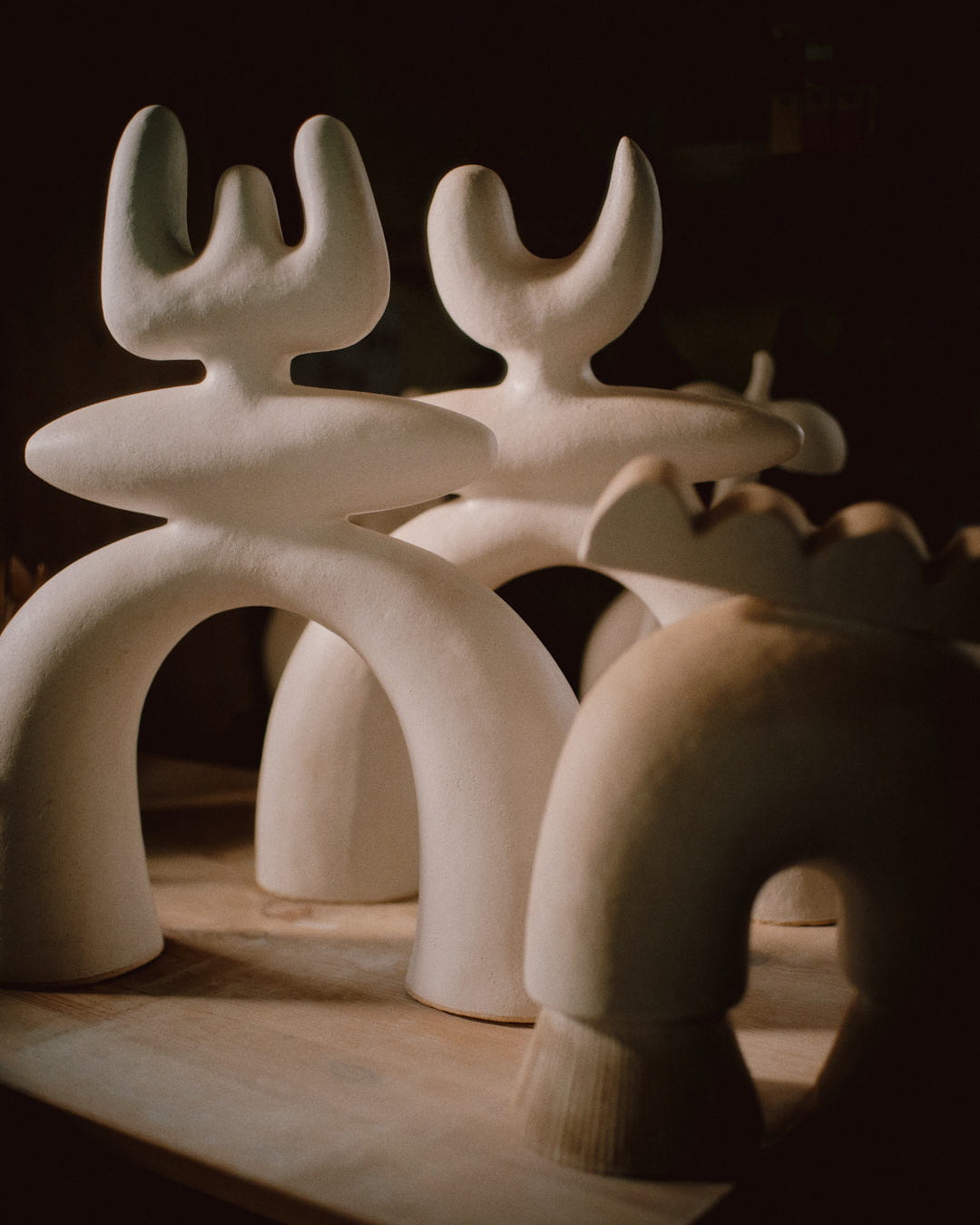
I want my ceramic creatures to act as vessels and conduits, translating ancient wisdom into a contemporary language. Not as nostalgia, but as a response to our times.
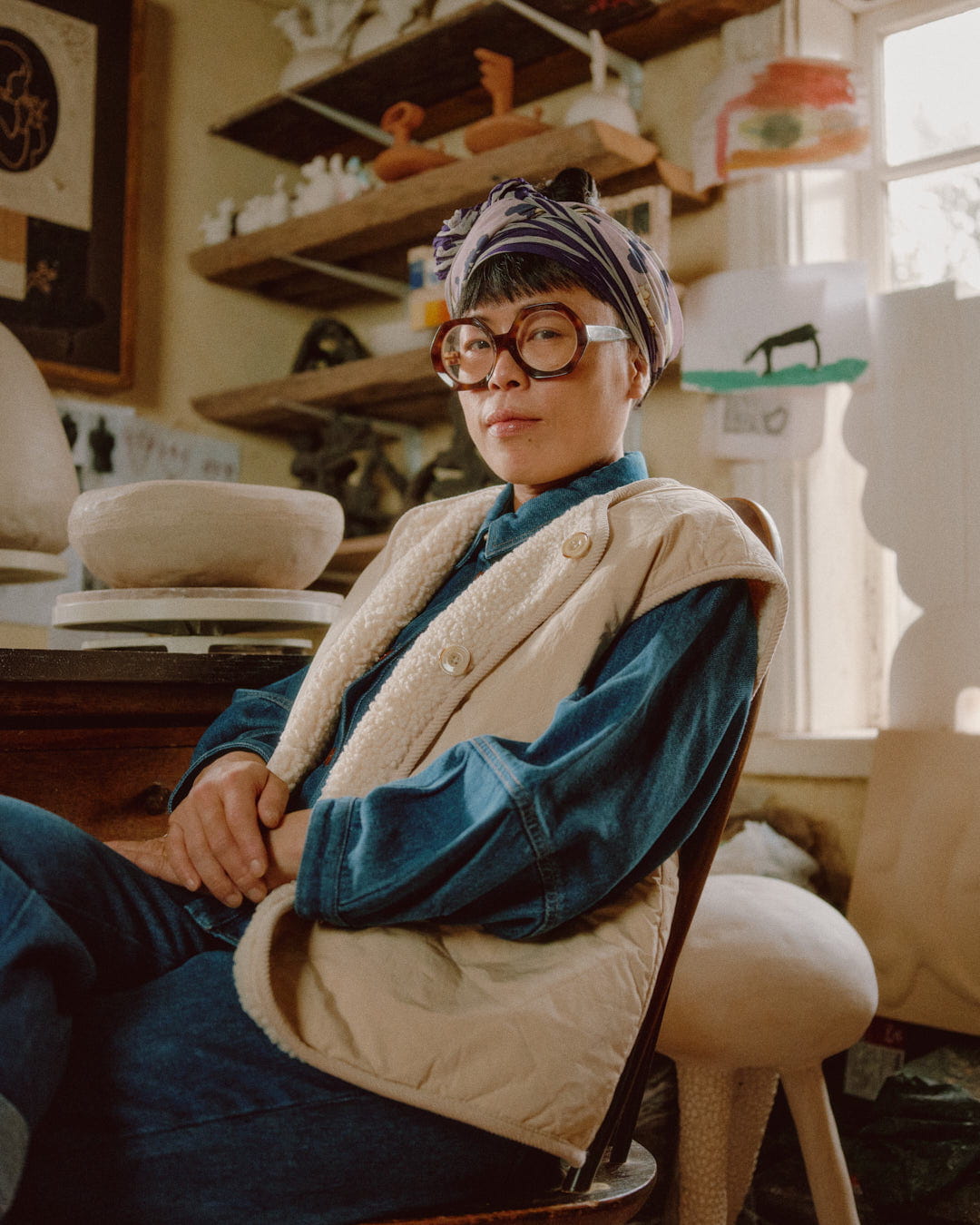
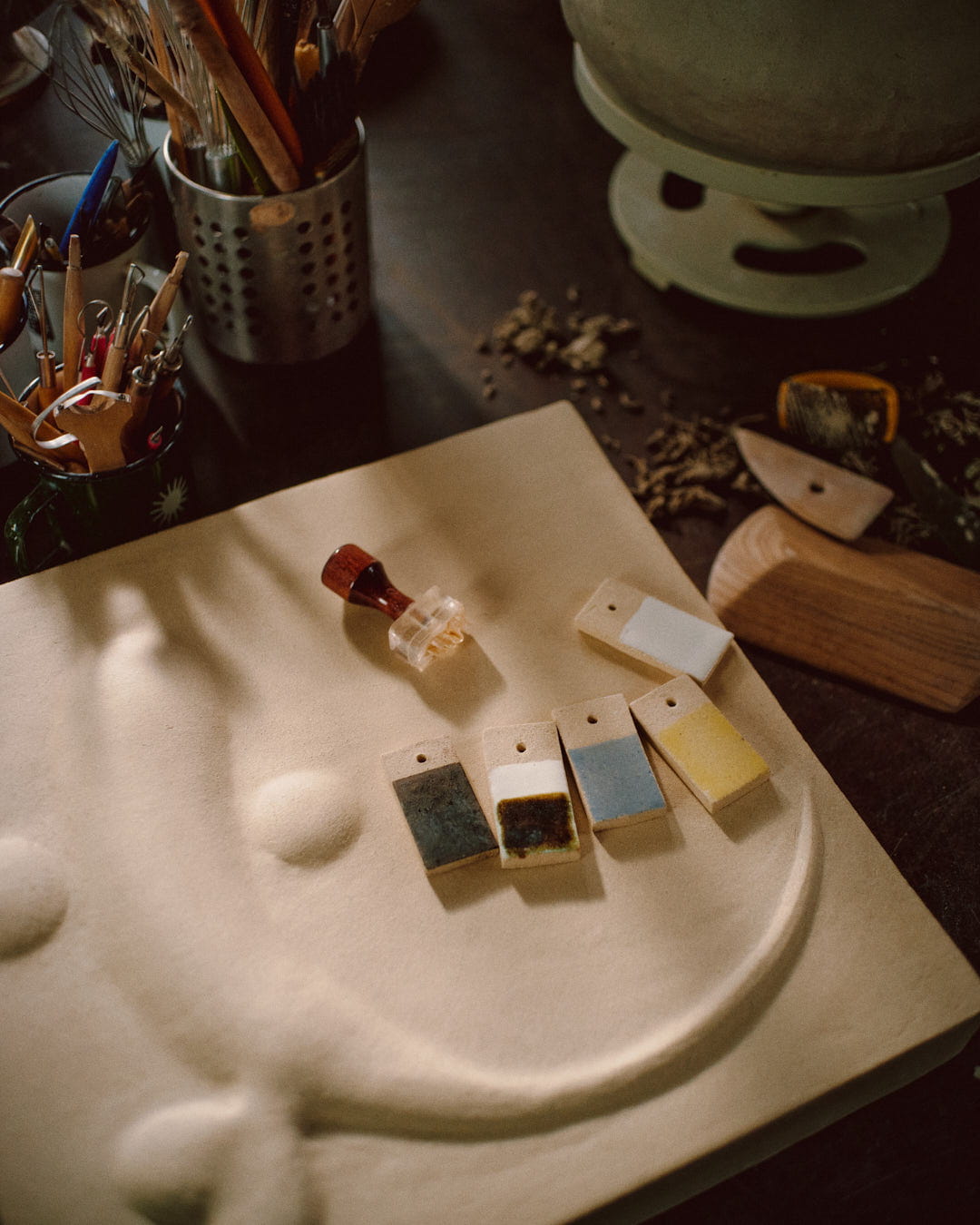
Can you describe the steps involved in creating one of your pieces, from the initial idea to the final realization? Your pieces exude great poetry and a true sense of freedom in your work with clay. What is your approach to form?
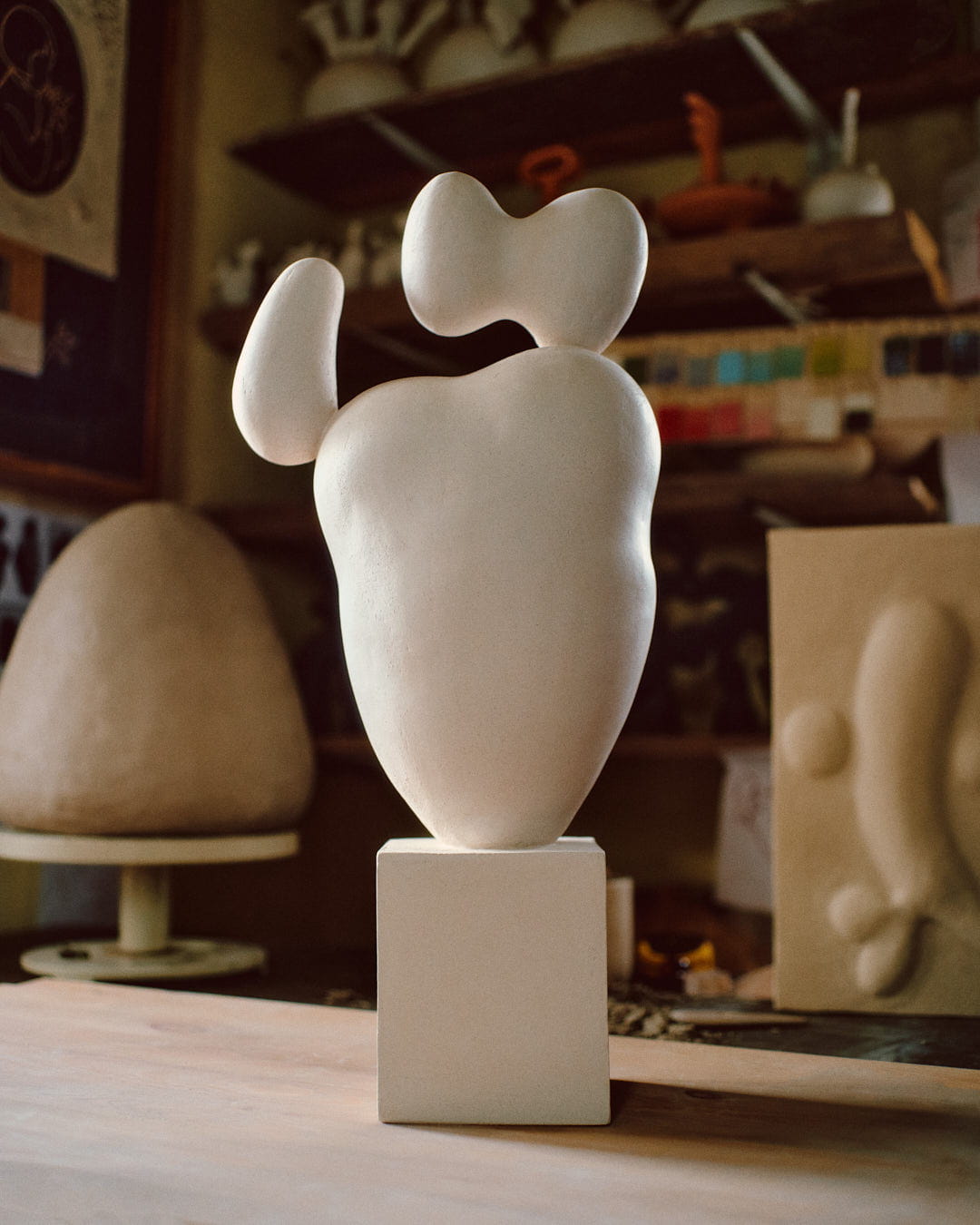
I don’t actually ‘Find’ Inspiration I Chase It Down. I start by writing messily, sketching quickly. Technically every collection begins the same: sketches. The first one often holds the DNA of the whole collection, even if I have no idea what I’m doing yet. Then, I make small models, each step giving shape to my thoughts.
But before the clay, before the sketches, comes the writing. Pages of it. Writing sharpens my thoughts, and helps me find the why. This isn’t just about shaping clay. It’s about shaping meaning.
For my last Haniwa exhibition, I sketched over 200 Haniwa warriors. Haniwa, the traditional clay figures from Japan’s Kofun period, were believed to protect souls in the afterlife. My designs draw on the intricate brilliance of samurai armor. The detail, the symbolism, the functionality it’s endless inspiration. But I hope for something different: I want these warriors to protect us now.

How does London influence your work and artistic vision, in contrast to Osaka?
Both cities have shaped me in profound ways. Osaka gave me the foundation of who I am as a person; London, the foundation of who I am as an artist. Growing up in Osaka, I had no idea how deeply my childhood experiences would later inform my artistic practice.
London and Osaka exist on opposite ends of cultural and philosophical traditions. Their contrasts are particularly striking in the realm of ceramic art. In the West (broadly speaking), referencing the "unseen"spirits, deities, or metaphysical elements is often met with skepticism, even resistance. In Osaka, by contrast, such themes are not only accepted but deeply embedded within artistic expression.
As a student in London, I quickly realized that my instinct to engage with traditional Japanese aesthetics and spiritual narratives was often seen as outdated, even intellectually reductive. The prevailing ethos valued concept over craftsmanship, and anything overtly beautiful or decorative was dismissed as indulgent. In contrast, my artistic practice in Osaka was rooted in the pursuit of meaning within beauty and tradition where refinement and spiritual resonance were not only valid but essential.
After graduating from Central Saint Martins, I found myself questioning whether beauty in art was inherently suspect was it too eager to please, too seductive to the viewer? Over time, I came to reject that false dichotomy. Now, I strive to integrate both perspectives, blending the conceptual rigor of the West with the aesthetic and spiritual depth of the East. It is within this tension, this dialogue between two worlds, that my work finds its unique voice.

For the Sessùn boutique in Islington, you designed a mural. Can you tell us about this collaboration?
When Sessùn approached me last year to create a wall sculpture, the brief was remarkably open-ended an act of trust for which I remain deeply grateful. It wasn’t just about designing something for a wall; it was about capturing the essence of Sessùn’s story, its history, and its spirit.
What resonated with me most was the journey of Emma François Grasset, Sessùn’s founder, through South America her immersion in its landscapes, its artisans, and its cultural richness. That story became my own point of departure, an imagined journey into the heart of a civilization long past yet still profoundly present.
In my mind, I found myself wandering through the ruins of an ancient Mayan city in Guatemala,. Amid the weathered stones, I envisioned an unearthed diptych, inscribed with a Sessùn alphabet. This sculpture, set at the heart of the boutique, couldn’t simply be a passive object. It needed to hold presence, to invite touch, to evoke something beyond the visible. I imagined my fingers tracing the relief of the stone, feeling the echoes of artisans whose precision and wisdom had outlived their names. This act of connection between past and present, between artist and viewer is what I sought to distill into the piece.
At its core, this work is an homage to the quiet power of craftsmanship, to the unseen hands that shape culture, and to the way objects can transcend time to tell a story.
What are your projects or ambitions for the future?
Bigger. Bolder. Beyond the gallery walls. I want to take my work into public spaces, to create sculptures that don’t just sit inside white cubes but exist in the world confronting, engaging, living. Of course, landing large-scale public commissions isn’t easy, but that’s part of the thrill.