It appears that your cart is currently empty!
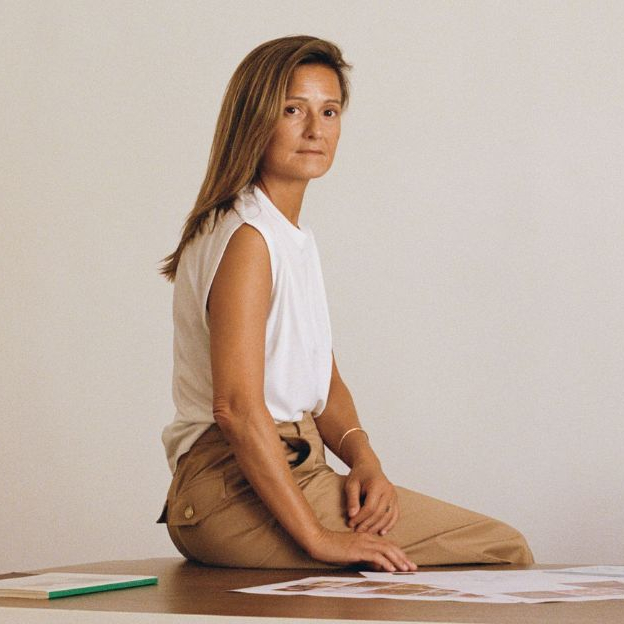
Originally from Shenzhen, Du Yuan is a self-taught ceramic artist whose practice emerged from a chance encounter with clay, gradually becoming an instinctive language over time.
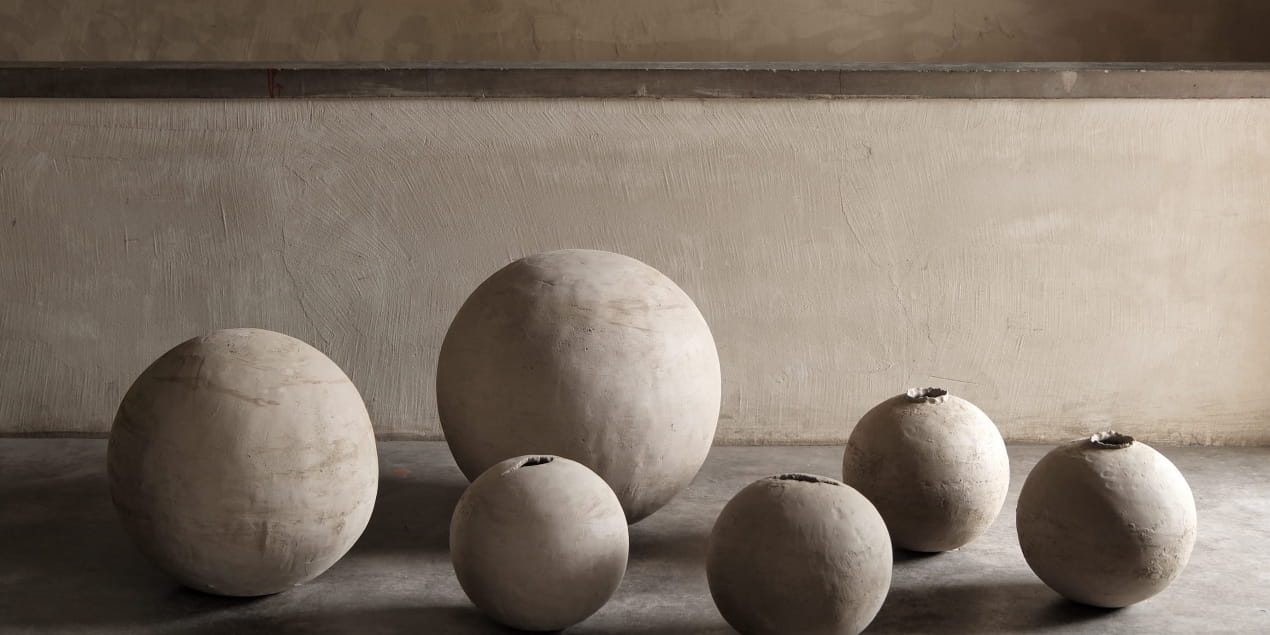
On the occasion of the opening of the Sessùn store in Shenzhen—conceived around the evocative imagery of the abacus—she created a series of pieces in quiet dialogue with this universe. Her forms, soft and rounded, carry the imprint of the hand and reflect an intuitive approach, where material, time, and memory continuously echo one another.
We met Du Yuan, who welcomed us into her studio and shared her vision of gesture, as well as the evolving nature of her work.


Could you introduce yourself and tell us a little bit about your background?
I am a ceramic artist. I grew up in Shenzhen and now live in Foshan. This is my seventh year working with clay. I didn't major in ceramics it was through chance that I came across clay, and from that moment, I knew this was something I would keep doing for the rest of my life.
What are your sources of inspiration? Are there any artists or artistic movements that have a particular influence on your work?
Most of my inspiration comes from things within arm's reach: stones by the roadside, the bark of an old tree in the yard, wood ash drifting from the kiln. Ancient Chinese vessels have had a deep influence on me their clean lines, the traces left by time settling on the surface. They are always just right. I love that natural, genuine quality a quiet kind of beauty.cieuse.

How do you integrate sustainable and ethical practices into your work?
Ceramics is, by nature, a craft rooted in earth, water, and fire. I use raw clay from local mines in
Foshan to reduce transport and material waste. When firing the kiln, I pack every inch of space with different pieces so that no heat is wasted. My work is meant to offer long-term companionship. For me, sustainability isn't a label it's just how life is lived here.
Take what you need, use what you take, and give the rest back to the land.


How did your design language take shape? Was there a key moment or experience that defined your style?
My journey with ceramics is like my journey of growing up. It started with simple curiosity. From making small teaware to now crafting large flower vessels, I've been constantly breaking boundaries and exploring. The language of expression came naturally my hands always move faster than my head. Each coil of clay is a choice of style.
What role do creative research and experimentation play in your practice?
I'm not someone who plans a lot, but I act quickly. So when a new idea comes to mind, I often start working on it before I've even finished researching it.
I believe in doing first and creating through practice.

For the new Shenzhen store, you designed pottery. Can you talk to us about these creations and describe the creative process, from initial idea to final realization?
Shenzhen is a city I know well I grew up there, then left as an adult. I suppose I've always felt a
natural distance from big cities. So for the Shenzhen store, I made pieces with rounded edges and softer forms, hoping they would feel gentler, slower, and more approachable.


What type of craftsmanship did you use and how many hours of work did it take to create the
artwork for the boutique?
I use the most traditional hand-pinching technique, because I love the freedom of shaping clay with my fingers and leaving my fingerprints on the surface. From wedging the clay, shaping, trimming, drying, glazing, loading the kiln, firing, to finally cleaning the pieces after they come out the whole process takes nearly a month.