It appears that your cart is currently empty!
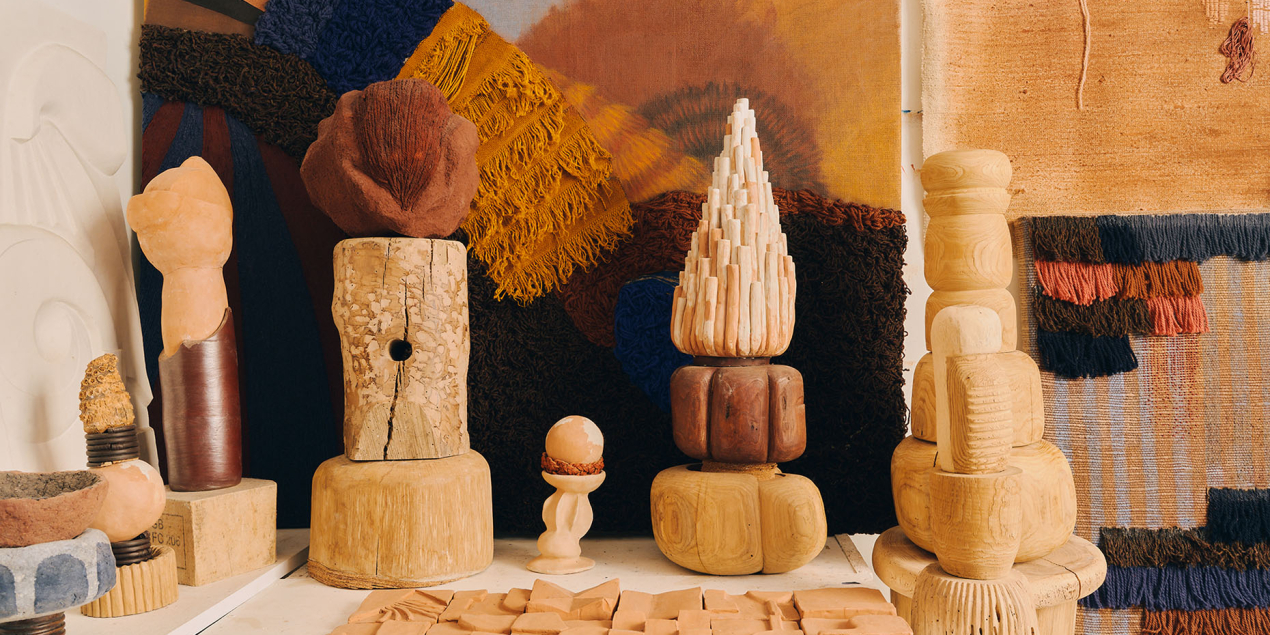
Photo credit : Florian Touzet
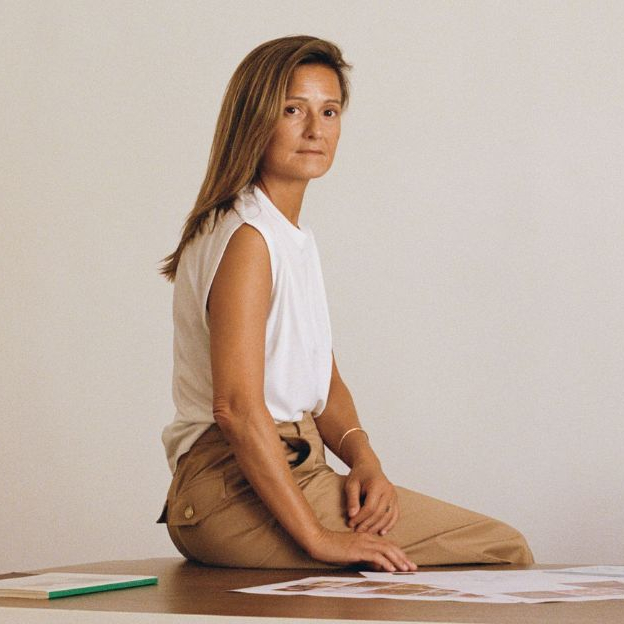
Camille Longuépée has been in tune with materials and colours all her life. Inspired both by family heritage and personal experiences, she has created a world where hand craftsmanship has become a language in its own right. From her beginnings in sewing to the creation of her childrenswear brand, and then her exploration of drawing, painting and sculpture, her journey has involved a constant dialogue with materials, whether raw, textile or natural.
Today, in her workshop, which she describes as a cocoon crafted with her own hands, every surface and object becomes a canvas; a source of inspiration. She brings together colours, textures, vintage objects and recycled materials to create works imbued with a spirit of instinct, experimentation and respect for the environment.
We met with Camille Longuépée, who let us into her creative world to discover memories, craftsmanship and her artistic visions for the future.


Can you tell us how your background and experiences led you to creating art and working with materials?
I grew up in a family where objects were really valued because of the story they carried. My grandfather was a passionate art collector and the house was always filled with books, paintings, rugs, sculptures, antique pottery, and objects from Tibet, Persia or Africa. We would go for walks in the vineyards to collect flint, we’d visit ruins... My other grandfather was an engineer and was passionate about woodwork. He made furniture, lamps and other objects by hand.
I myself felt compelled to make things using my hands from a very early age. I started by sewing with my mother and grandmother, who sewed her clothes on her old Singer.
At the age of 18, I went to study at the École d'Arts Appliqués Duperré in Paris, in the textile department, and then at the École des Arts Décoratifs de Paris.
I worked as a film costume designer for ten years. While doing that, I had children and began working on collections of knitted children's clothing (jersey and tricot). I then created my brand, Le Petit Germain, whose identity revolved around colour, namely mustard, indigo and terracotta. At that time, those colours weren’t very common in the world of kids' clothing.
After a rapid worldwide expansion, the brand became too much to handle on my own, so I felt the need to take a break.
By chance, I had the opportunity to become a baker for a year – an experience I cherished. At the same time, I started drawing, painting and writing again. I felt an urgent need to get back to creating things.
I had been through some tough times during the years prior, so that return to creating sorted out a lot of things in my head. This balance is something that, to this day, I cannot do without.
Being able to work with raw materials and colour feels like taking in air after a long period of holding my breath; working with my hands both gives me energy and calms me at the same time.
What do you feel your style shares with the Sessùn universe?
Firstly, the colours, which are always very detailed, whether subtle or deep. The fabrics too – they vibrate, have a particular "feel", sometimes light and airy, sometimes textured and enveloping, like embroidery or jacquards. The importance given to craftsmanship is, of course, essential. These are values that I relate to deeply. Now in particular, it is essential to keep the fabric of craftsmanship and artistry alive. We urgently need to preserve hand craftsmanship and all the imperfections that come with it, which are full of soul and history.

Your workshop is described as a cocoon crafted with your own hands. How does this space influence your creative process and your relationship with your creations?
I find it difficult not to alter my environment. I need to make the space my own, to make it welcoming, and to express my individuality and humanity. I gradually mould all the spaces I occupy. This could be by creating a lamp, a headboard, a bas-relief using scrap wood, a stool, a bookcase, a fresco for the wall, or even a door. In reality, nothing holds me back – any surface is a potential canvas for me.
My workshop used to be a modern estate agency, with roughcast on the façade, dark grey tiles and a red wall. It was an exciting challenge for me to redo everything, to lay the foundation for this new creative space. From the plastering to the old-fashioned façade, the moulding, my own colour scheme, the sign, the painting of the floor tiles, and the making of the furniture... I spent weeks on it!
When I’m in my workshop, I need to surround myself with my own universe and feel immersed in all its facets, whether its the sculptures, paintings, drawings, bas-reliefs made from plaster, or the fabric embroidery. As I work with many different media, this allows me to maintain consistency and build connections between each piece of work and each medium, which feed off each other.


What are your main sources of inspiration and how are they manifested in your work?
That world in which I grew up has obviously influenced me and is now intertwined with my lived experiences, my daily life and my feelings. I find inspiration everywhere. It can come from exhibitions I visit, art brut, medieval, modern or classical paintings, photography, architecture... but also from a particular light, smell, sound, or from nature, which always captivates me with how perfect it is.
Colours are my primary source of wonder. When I'm walking, I often filter the colours I perceive, isolating the dominant one before the more subtle nuances. It reminds me of a game we played as children with yellow cars... I am constantly filled with feelings and emotions that I transpose into my work, which I call my 'inner landscapes’ – true snapshots of my inner state.
You place great importance on instinct and experimentation. How do you know when a work is truly 'complete' or that it expresses what you wanted to express?
Indeed, I work almost exclusively on instinct. Nothing is planned in advance, I follow the path my hands set out and let them guide me, whether for a painting, sculpture or drawing.
The moment when you 'finish' a piece is both delicate and delightful. It's difficult to explain, but it's like a dialogue with the work – at a certain point, I stumble upon a harmony that speaks to me, soothes my senses and makes me say, 'OK, I'm not going to touch anything else'. Even the flaws, the parts that seemed unfinished before, suddenly appear perfect, and everything aligns. It's like when you’re writing: sometimes you use a full stop and realise it's going to be the final one.

How do you incorporate environmental concerns and sustainable material choices into your artistic approach?
The environment is a real concern for me, and that largely means not wasting anything. I keep everything, and I recycle everything. I always start by using what I have around me, down to the last bit of thread, which I incorporate into my embroidery, or the smallest scrap of wood, which I use for bas-reliefs. I even have wool that dates back to my great-grandmother's times, from when she used to unravel old jumpers herself.
My wooden sculptures, including the candleholder sculptures created for Sessùn, are made from wood that I collect in the forest and then carve, turn, and combine with vintage objects such as old pipes, pieces of reworked furniture, leather scraps, pieces of nature gathered during walks, dried lemons, nuts, and other things.
The fabrics I use in my paintings or embroidery come from second-hand textiles which often have imperfections, but again, I keep every last piece, which I can then reuse for curtains, bedspreads or tablecloths. I buy the minimum amount of material needed, except perhaps for paint... but even then, I recently used pigments I found in the attic – they still had their old labels on them and were from the 1920s!


What are your future plans, goals, and directions you wish to explore in your art?
I’m currently preparing an exhibition at the Wilo and Grove Gallery in March. I also have some interior design projects lined up, including a large wooden table base that needs to be carved. I’m particularly interested in these kinds of projects, such as bas-reliefs or frescoes, because they combine art and craftsmanship, and exist as part of everyday life, contributing to people's lives. It’s also an opportunity for me to explore new proportions and much larger formats. Working on a bigger scale is a step I am keen to take.
I want to search for new, raw materials to work with, sourced directly from the natural world around me, I plan to build my own ceramic kiln, and I want to keep experimenting... always.